
Poetry in Motion

Spring Has Sprung
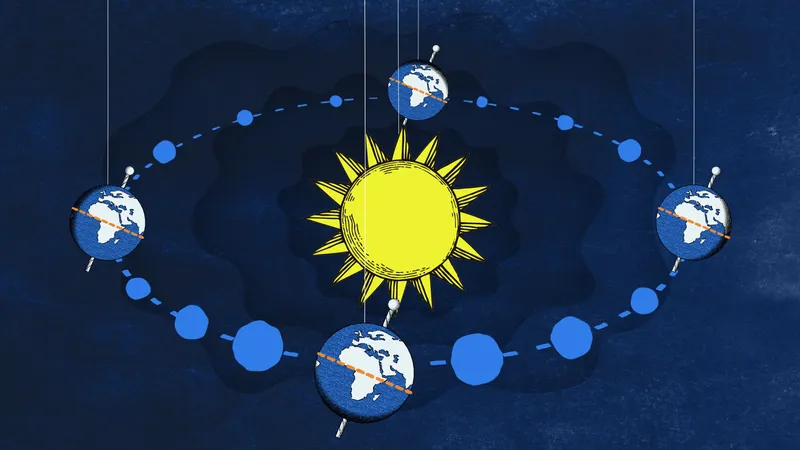
This weekend is an equinox, as the Sun moves north across the celestial equator, marking the first day of spring in the Northern Hemisphere and the start of fall in the Southern Hemisphere. Here’s more on this seasonal harbinger.
This weekend’s equinox is one of only two times a year (the other being the equinox that occurs in September) when the Sun appears exactly above the Equator, theoretically making day and night of equal length. In fact the word equinox comes from the Latin aequinoctium, meaning “equal night.”
Not a solsticeIt’s easy to confuse the terms equinox and solstice, but they are sort of opposites. The two annual solstices happen in June and December. These are the days when the Sun’s path in the sky is the farthest north or south from the Equator. So, while an equinox splits day and night equally, a hemisphere’s winter solstice is the shortest day of the year and its summer solstice is the year’s longest. Check out the video below for a full explanation.
The origin of the word spring is intuitive, derived from Old English springan, meaning “to leap, jump, or burst forth.” The term winter comes from an old Germanic word meaning “time of water.” Summer came from the Old English sumor, meaning “the hot season.” And, much like spring, the meaning of fall needs no explanation, though for centuries the entire season was known simply as “harvest.”









Featured Games
See All






Trending Quizzes
See All Quizzes




Featured Videos
See All Videos
-
加拿大联盟pc28官方在线预测, Inc.
-
加拿大联盟pc28官方在线预测, Inc.
-
加拿大联盟pc28官方在线预测, Inc.
-
加拿大联盟pc28官方在线预测, Inc.
-
加拿大联盟pc28官方在线预测, Inc.














![Frida Kahlo: El sueño (La cama) (1940; The Dream [The Bed])](static/picture/frida-kahlo-sothebys-london-el-sueno-la-cama-the-dream-the-bed.jpg)